While there’s no cure for Alzheimer’s disease, new advancements in treatment can help slow its progression, particularly in the early stages. Experts at MU Health Care specialize in diagnosing the condition and provide personalized treatment plans to support the entire family.
Alzheimer’s disease (AD) is a common cause of dementia, a brain condition defined by changes in thinking, memory and behavior. People with AD have a buildup of proteins in their brain that permanently affects how the brain functions. However, recent advances in Alzheimer’s disease are helping slow its progression and better manage the condition.
As the only dementia clinic and academic health system in mid-Missouri, we offer evidence-based strategies to support you and your loved ones.
Alzheimer’s Disease Symptoms
Symptoms of Alzheimer’s disease are not part of normal aging. Signs that you or a loved one could have AD include:
- Memory loss that disrupts daily life
- Challenges in planning or solving problems
- Difficulty completing familiar tasks
- Confusion
- Trouble understanding visual images
- Difficulty speaking or writing
- Losing things
- Withdrawing from activities
Not everyone who has these signs has Alzheimer’s disease, and people who have AD may experience symptoms differently. That’s why getting an expert diagnosis is important to finding the best path forward.
How to See an Alzheimer’s Disease Specialist
If you notice these warning signs, our expert team can provide an evaluation. Your primary care doctor or other specialist can refer you to our team. Or you can reach out to us directly for an evaluation or second opinion.
How We Diagnose Alzheimer’s Disease
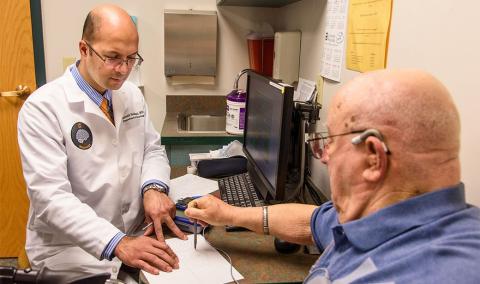
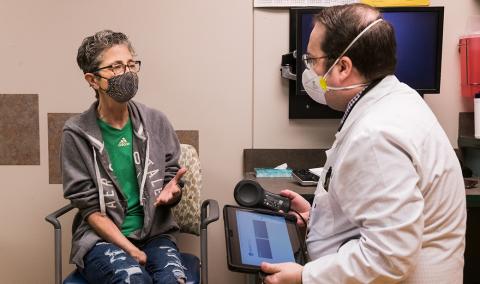
During your first appointment with our team, you’ll meet with a neurologist who specializes in behavioral neurology and neuropsychiatry. They will ask about your health and family history. You’ll also have a neurological examination and brain function tests.
After your first appointment, we may recommend further testing.
Tests for Alzheimer’s
Our team uses several tests along with your examination to diagnose Alzheimer’s. Tests we may recommend include:
- Blood tests: Look for treatable contributors to memory loss and certain biomarkers (biological signs) of Alzheimer’s disease.
- Amyloid positron emission tomography (PET) scans: Detect clumps of protein buildup (plaques) in the brain associated with AD.
- Neuropsychological tests: Assess your brain function.
- Other imaging tests like magnetic resonance imaging (MRI) or computed tomography (CT): Look for changes in your brain anatomy.
Based on these tests, we can determine whether you or your loved one has Alzheimer’s. If we identify biomarkers for Alzheimer’s, we can suggest medications that may potentially slow the disease.